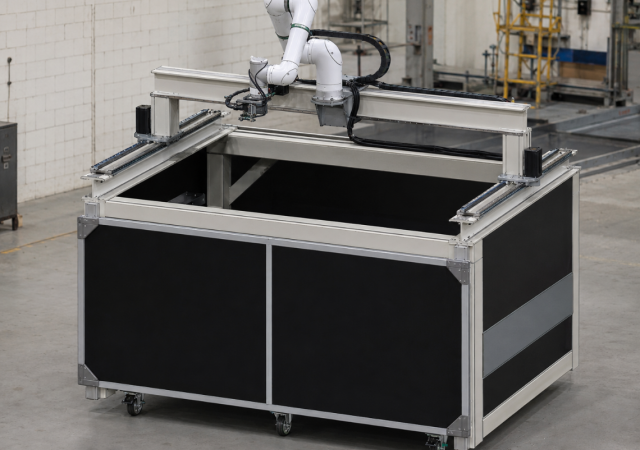
Aluminum Ladder Laser Welding Automation
Aluminum Ladder Laser Welding Automation
Aluminum Ladder Laser Welding Automation · Robot SI Reference
Project Overview
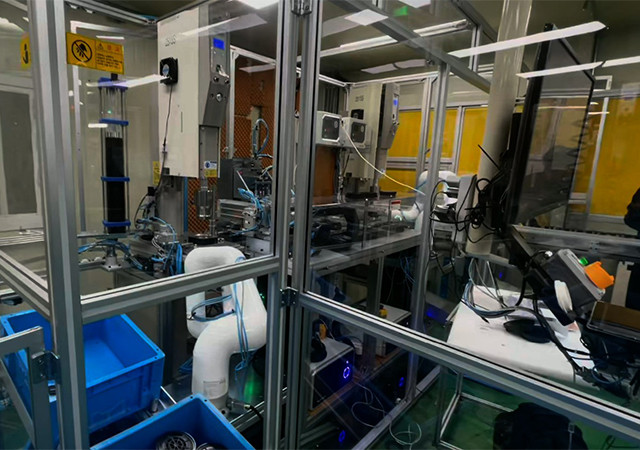
A robotic laser-welding automation line applied to the aluminum ladder manufacturing process. Once an operator loads 6 m raw-material pipes onto the tray, automatic feeding → cut-to-length by specification → alignment run continuously; the robot then picks up the workpiece, seats it in the welding jig (forming fixture), and performs laser welding. Finished products are automatically discharged by conveyor, achieving fully unmanned operation from material loading to discharge.
Laser Welding Process
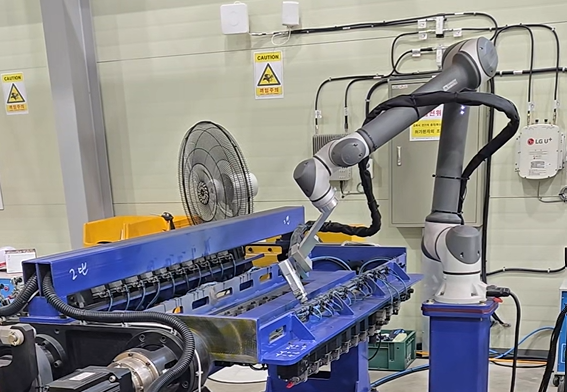
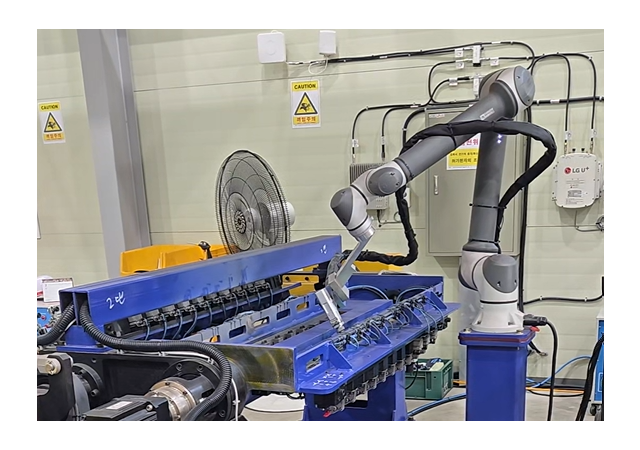
▲ The robot laser-welds an aluminum ladder seated in the welding jig
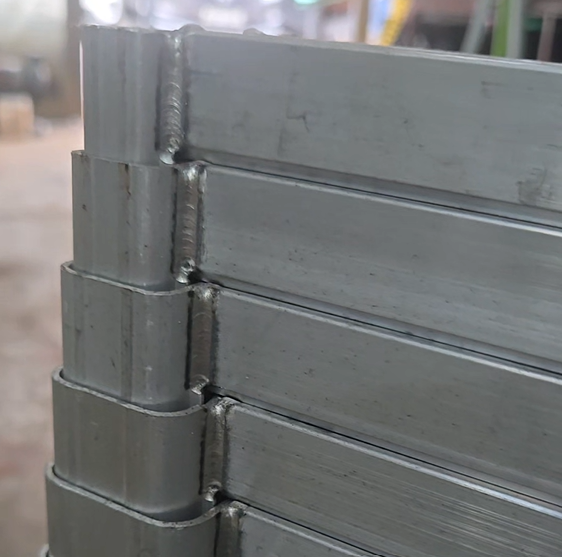
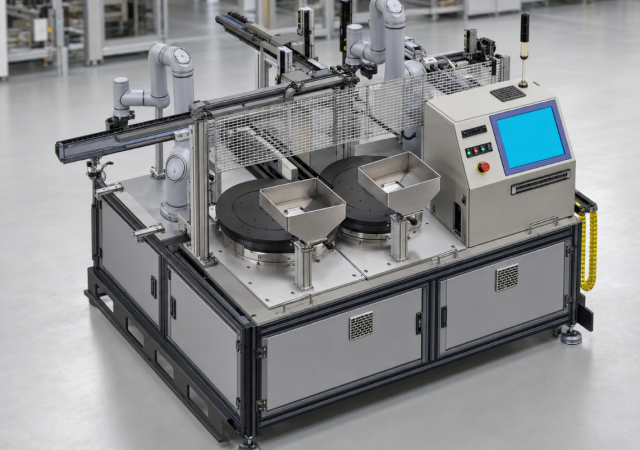
▲ Automatic welding cell based on a collaborative robot + laser welder
Process Flow
Raw Material Pipe Loading
An operator loads 6 m aluminum pipes onto the material tray. The subsequent processes then run continuously and unattended.
Automatic Feeding
The loaded pipes are fed one by one to the cutting unit through an automatic feeding device.
Automatic Cut-to-Length
Pipes are automatically cut to length by specification according to the ladder specs (side rails, rungs, etc.).
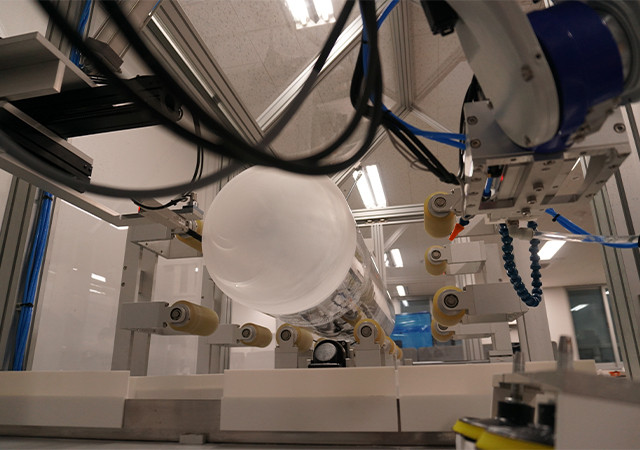
Workpiece Alignment
The cut workpieces are aligned in the correct positions so the robot can pick them up. Alignment precision determines the welding quality.
Robot Pick-up & Jig Seating
The robot picks up the aligned workpieces and seats them accurately in the welding jig (forming fixture) that defines the ladder shape.
Robot Laser Welding
The robot laser-welds the joints of the aluminum ladder along the welding path. Localized heat input minimizes distortion and ensures uniform welding quality.
Automatic Conveyor Discharge
The completed ladder is automatically discharged by conveyor and connected to the downstream process.
Benefits
- Fully unmanned automation from material loading through cutting, alignment, welding, and discharge
- Laser welding minimizes aluminum distortion and uniformizes weld quality
- Reduces reliance on skilled welders and improves operator safety (lower arc/fume exposure)
- Automatic cut-to-length handles high-mix ladder specifications
- Continuous production improves productivity and shortens lead times
Applications
- Welding of lightweight structures such as aluminum ladders and scaffolding
- Processes requiring assembly welding after pipe / profile cutting
- Laser-welding automation for aluminum and lightweight metals
- Structure manufacturing lines that must handle high-mix specifications
- Products where uniform weld quality and distortion control are critical